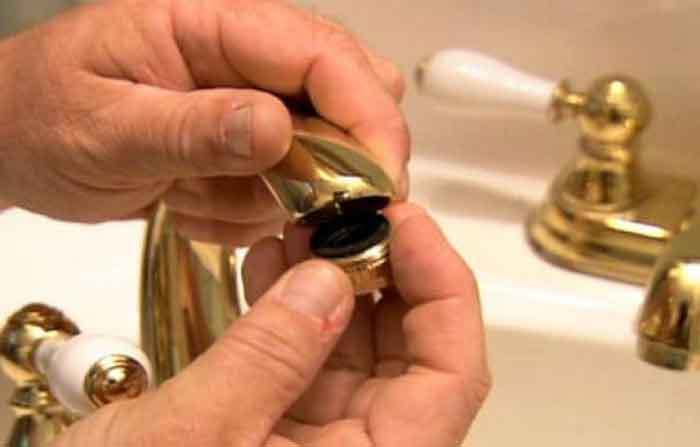
How to Remove Recessed Faucet Aerator

Have you noticed that every time you turn on your faucet the water pressure is lower than it used to be?

This is actually a quite common problem in households, and while most people’s first reaction is to call a plumber there is in fact a really simple solution to this problem.

The trick is to locate the aerator on the end of the faucet spout and remove it.

How to Convert Fixed Shower Head to Handheld

Fixed or commonly known wall-mounted shower heads can be very reliable, easy to use and enjoyable because you can just walk right in and have a nice relaxing shower with your both hands free.

But, if you want to teach your child how to shower on his own, or you have a demanding dog whom you have to shower from close range, considering a handheld showerhead can be a very smart idea.

Let’s see how exactly can you change your fixed shower head for a handheld on your own.

How Much Water Does It Take To Flush A Toilet?

Toilet Flushes Slow but Not Clogged

Nowadays, most people take water consumption very lightly. But, as we are growing in numbers, over time there were some changes made to minimalize the amount of water we are spending unnecessarily.

Particularly, in this case, the question of toilet water usage by flushing is the point of discussion. So, have you ever wondered how much water is needed for a single flush of your toilet and how much does it cost you?

Is it necessary for us to try to prevent water waste, or is it convenient to just flush our toilet as many times as possible, no matter if it is needed or not?

How to Remove Calcium Deposits from Faucet

How to Remove Calcium Deposits from Faucet

As we all know, every household needs to deal with calcium deposit stains every once in a while.

Calcium deposits, also known as limescale, usually come from water that contains softened calcium salts (calcium carbonates). Water that contains a high level of these minerals is commonly known as hard water.

Hard water is easy to notice, the first signs that you are having this problem are white stains and build-up around your faucet. The build-up may also take a yellowish tone and this could be an indicator that there is also some iron in your water and this can lead to your sink being blemished and rusty.

But before you rush and call your plumber to the rescue, you can try out this method to try and take care of the problem yourself.

All you need are a few supplies that you probably already have sitting around in your home. So, let’s begin.